
Trevi nel Lazio is a village in the province of Frosinone, located at 821 meters above sea level between the mountains Simbruini and Ernici. The country is lapped by the River Aniene, that in the locality of Comunacque, from life namesake and picturesque waterfall. The municipality has about 1800 inhabitants called trebani. In addition to the Parco dei Monti Simbruini, Trevi nel Lazio is part of the mountain community of Ernici.
HISTORY
In ancient times the area of the town belonged to the territory of Equi, later with the conquest by the Romans became part of the tribe Aniensis (dell’Aniene tribe), established in 299 BC In the late Republican was City Hall as the Treba and later Treba Augusta. In its territory he originated the aqueduct Marcia. During the Middle Ages it became a district of the Diocese of Trevi that, in 1088, was built by one of Anagni. The feud Trevi was disputed for centuries between local lords and monks from the nearby Abbey of St. Scholastica in Subiaco. In 1302 the castle was bought by Pietro Caetani; such possession was in the hands of the house until 1471, when the same Caetani were expelled following a popular uprising. In 1872 the city council changed the name of the country in Trevi nel Lazio. In 1927 with the reorganization of the provinces, the municipality became part of the province of Frosinone.
ART AND MONUMENTS
The ancient settlement of Trevi nel Lazio, characterized by striking views, still has several gateways and ancient portals, however, the most important monument of the town is definitely the Caetani Castle, located in the highest part of the village, in the area called “Civita” and characterized by large male central quadrangular. This military structure, was mentioned for the first time in the eleventh century AD although its origins may be much older. In the thirteenth century the castle suffered severe damage as a result of a fire. In 1915 it suffered new damage, this time because of the earthquake of Marsica. The current appearance is the result of last renovation took place in 1984.
Among the religious architecture present stands the Collegiate Church of Santa Maria Assunta; the church of the XIII century and was enlarged in the fifteenth and seventeenth century, reusing the materials of the ancient cathedral of San Teodoro, it fell into ruin after the suppression of the diocese of Trevi. Are then mentioned the oratory of San Pietro hermit (patron saint of the country), the Chapel of Our Lady of Rest and the Chapel of St. Sebastian.
Outside the town we find the Arch of Trevi, a monument of great historical interest; it is a water barrier in blocks with large arched opening attributable to the III – II century BC . Its original purpose was probably to controlled access along the border between the territory of the Equi and the Ernici.
THE NATURE
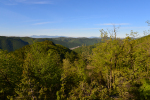
Trevi nel Lazio, surrounded by theParco dei Monti Simbruini, offers places of high natural interest; all worth mentioning the strict nature reserve of Faito Mount and the immense forests that date back to the slopes of Heartbreak Mount and the northern slope of Ernici, ideal habitat pearl survival of wildlife species at high risk of extinction such as wolves, roe deer, deer and brown bear. The territory of Trevi nel Lazio is also lapped by the clear waters of the river Aniene.

Devi effettuare l'accesso per postare un commento.